
Table of Contents
From Scribbles to Masterpieces: How Step-By-Step Drawing Unlocks Your Toddler’s Hidden Potential
- admin
- May 14, 2026
Latest Posts
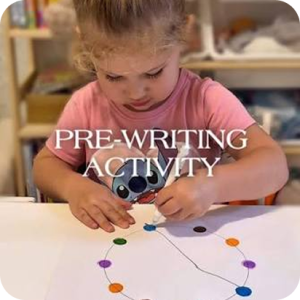
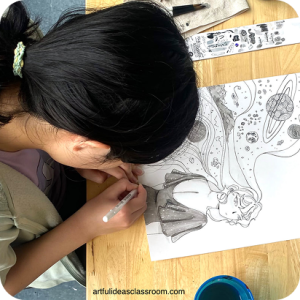
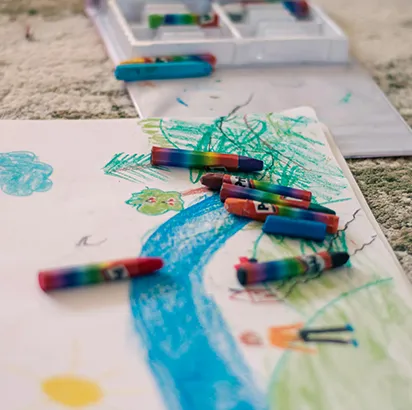
There is a moment every parent recognizes. Their toddler, clutching a crayon with total
concentration, pushes their tongue out the corner of their mouth and makes a mark on the page. They look up, beaming, and announce: “That’s a lion!”
To an adult eye, it might look like a cheerful tangle of loops. But to a developmental scientist or to any parent paying close attention that drawing is extraordinary. It is evidence of imagination, intentionality, fine motor engagement, and the very early stages of visual storytelling. In short: that scribble is your child’s first masterpiece.
The question every parent then asks is: how do I help them go further? How do I nurture this
natural spark without overwhelming them, without making it feel like schoolwork, and without squashing the joy that makes art so powerful for young children in the first place? The answer, as it turns out, is simpler than most parents expect.
The Science Behind Why Toddlers Need Structure in Art
It might seem counterintuitive: doesn’t giving a toddler structured drawing instructions limit
their creativity? Research in early childhood education says the opposite is true. Structure, when it is age-appropriate and warmly delivered, is not the enemy of creativity it is the foundation creativity grows from.
When young children are given a completely blank page with no guidance, many experience what educators call “creative paralysis.” They do not know where to begin. They become
frustrated. They compare their work to what they imagine it “should” look like and feel defeated before they have even started.
But when a child is given clear, small, manageable steps — draw a circle here, add two triangles for ears, now give him a smile something remarkable happens. The child’s hand learns to follow the instruction. Their eye learns to observe. Their brain begins to understand that complex
images are built from simple shapes. And most importantly, they experience the profound satisfaction of completing something.
What Great Drawing Instruction for Children Actually Looks Like
Not every workbook that claims to teach children to draw actually understands how children learn. The difference between a workbook that collects dust and one that a child reaches for every morning comes down to a few essential qualities qualities that define the work of a true Author of Step-By-Step Drawing Instructions for Kids.
The hallmarks of truly great children’s drawing instruction:
- Steps that are genuinely small each one builds naturally on the last, with no leap too large for a little hand to manage.
- Subjects that children actually care about animals, silly faces, things from their daily world, characters that make them giggle.
- A tone that is warm and celebratory rather than corrective one that treats every attempt as a success worth building
- Visual clarity large, clean illustrations that a child’s eyes can follow without
- A pace that respects a short attention span while still delivering a satisfying sense of
These are not just nice-to-haves. For toddlers and young children, they are the difference
between a child who says “I can’t draw” and a child who says “Watch what I can do!” The right book, delivered in the right way, shapes how children see themselves as learners for years to come.
Why Cartoon Animals and Fun Objects Are the Perfect Starting Point
Ask any toddler what they want to draw and the answer is almost always the same: animals. Dogs, cats, lions, elephants, frogs, foxes. These subjects are not randomly popular they tap into something deep in young children’s psychology. Animals are safe, familiar, and endlessly expressive. A cat can be happy, grumpy, surprised, or sleepy, and a child can project any emotion onto it.
This is why the work of an Inspiring Author of Cartoon Animals & Fun Objects Art Books like Ellie Christine Patton centers on exactly these subjects. Cartoon animals with round, friendly features and expressive eyes are ideally suited to the geometric shapes circles, ovals, triangles
that young children are developmentally ready to draw. They are achievable without being boring, and delightful without being overly complex.
Fun objects ice cream cones, birthday cakes, little houses, balloons, stars serve a complementary role. They connect drawing to the child’s everyday world, making art feel relevant and personal rather than abstract. When a toddler draws a birthday cake and immediately thinks of their own last birthday, art and memory and emotion all come together on a single page.
The Fundamentals of Drawing: Building Blocks Your Child Will Use Forever
One of the most important things that separates a genuinely skilled children’s art author from someone who simply puts pictures in a book is a deep understanding of the fundamentals of drawing for children. These fundamentals are not the same as adult drawing theory. They are a child-specific set of building blocks: understanding that all shapes come from circles, squares, and triangles; learning that lines have direction and weight; discovering that overlapping shapes create depth.
An Expert Author of Fundamentals of Drawing for Children understands that these concepts must be taught implicitly woven into the fun of drawing a cheerful lion or a lopsided robot rather than presented as a formal lesson. Children learn the rules of drawing the same way they learn the rules of language: by doing it over and over in a context that feels natural and joyful.
By the time a child has worked through a well-designed drawing workbook, they have internalized dozens of foundational artistic concepts without ever sitting through a formal art lesson. They know, in their hands and eyes if not yet in words, that you start big and add details. That symmetry makes faces recognizable. That bold outlines make cartoons pop off the page.
These are skills that will serve them in every creative endeavor for the rest of their lives in art class, in design, in architecture, in storytelling, and in the everyday creativity that makes a full human life.
Art as a Journey, Not a Destination: Helping Your Child Grow Continuously
One of the most common mistakes well-meaning parents make is treating their child’s art as finished. A child draws something, it goes on the refrigerator, and that’s the end of the conversation. But children who grow into confident, expressive artists are the ones whose parents treat drawing as an ongoing conversation a journey with no final destination.
What your toddler needs is a Creative Author Offering Drawing Strategies for Continuous Growth someone whose books are designed not just to teach individual drawings, but to progressively build the skills, confidence, and creative vocabulary that allow children to keep growing as artists year after year.
This means books that revisit foundational shapes while introducing new concepts. It means subjects that evolve in complexity as children’s abilities evolve. It means a philosophy of art education rooted in the belief that every child, at every level, has something new to discover and that the discovery itself is the point.
5 Simple Ways to Support Your Toddler’s Artistic Growth at Home
You do not need to be an artist yourself to raise one. Here is what the research and experienced children’s authors consistently recommend:
- Draw alongside your Your presence and participation signals that art is valuable and worth your time.
- Ask open-ended questions about their “Tell me about this one” is more powerful than “What is it?”
- Display their work A child whose art is displayed learns that their creative voice matters.
- Celebrate the process, not just the Praise the focus and effort, not just the outcome.
- Use a quality workbook that provides clear, confidence-building steps and let your child lead the pace.
Start Your Child’s Creative Journey Today
Every great artist started exactly where your toddler is right now with a mark on a page, a spark of imagination, and someone who believed in them. Ellie Christine Patton’s How To Draw:
Workbook for Young Artists, Volume 01 gives your child the tools, the structure, and the encouragement to turn that first scribble into a lifelong love of art.
Designed for ages 4 to 15, packed with step-by-step cartoon animal drawings and fun object illustrations, and built on a philosophy of confidence-first art education this is the workbook that grows with your child, one joyful drawing at a time.
➡ Get the Workbook: elliepattonartandbooks.com
FAQs
Three is never too early to introduce art as a joyful activity. While the workbook is officially designed for ages 4 and up, many parents of 3-year-olds use it as a guided activity, working through steps together with their child. At this age, the goal is not a finished drawing it is the experience of holding a crayon with purpose, watching shapes appear, and feeling proud of what their hands can do. Every moment spent with art at age 3 is an investment in the confident young artist they are becoming.
Both are important, and neither should replace the other. Free drawing is where children express emotion, experiment, and play without limits. Step-by-step drawing is where they build the technical vocabulary shapes, proportions, line control that makes their free drawing richer and more satisfying over time. Think of step-by-step instruction as giving a child new words: it does not tell them what to say, but it gives them more ways to say it.
Even ten to fifteen minutes of focused drawing three to four times a week produces meaningful developmental benefits. The key is consistency over duration a short, joyful session is far more valuable than a long one that ends in frustration. Follow your child’s lead. Some days they will want to draw for an hour; other days, one completed drawing is a victory. Both are perfect.
Ellie’s books are built on a single philosophy that sets them apart: the belief that confidence comes before skill, not after it. Most children’s drawing books are designed around what the finished drawing should look like. Ellie’s books are designed around how the child should feel at every step of the process. When a child feels capable, encouraged, and proud rather than corrected or overwhelmed they naturally develop the persistence and curiosity that drive real artistic growth. That philosophy is present on every page.